
Resilience is the strength that remains after force has already hit.
It is easy to admire strength before pressure arrives. It is harder to understand the kind of strength that survives after impact, after failure, after grief, after exhaustion, after the moment when certainty breaks and comfort disappears. That strength is resilience.
Resilience is not denial. It is not pretending pain has no effect. It is not smiling through damage as if nothing happened. Real resilience tells the truth about hardship and keeps moving anyway.
That is why resilience matters so deeply. It allows a person to continue, recover, adapt, and rise again without needing life to remain easy or untouched.
If you are looking for the meaning of resilience, or what resilience after hardship really requires, this is where to begin.
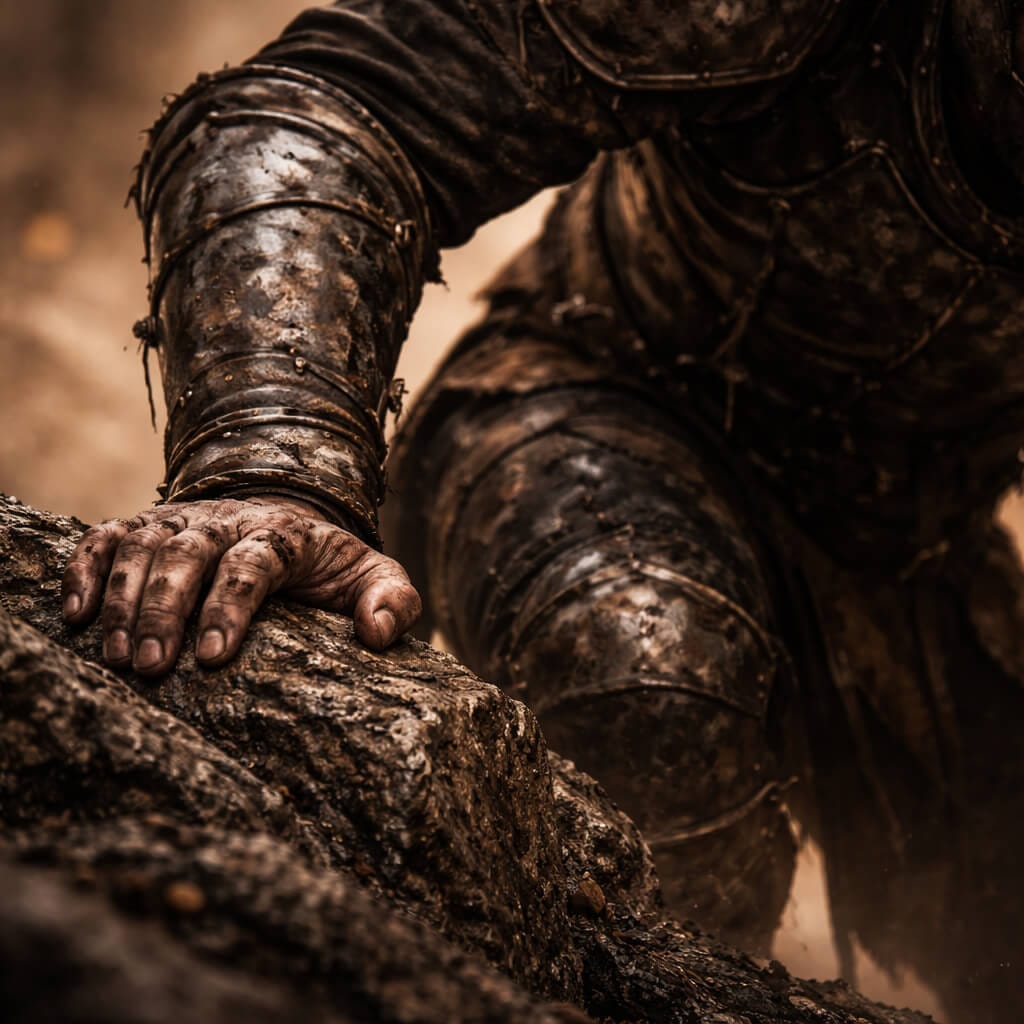
What Resilience Really Means
Resilience is the capacity to endure disruption without surrendering your whole structure.
It does not mean you never feel pain. It means pain does not become the final authority over your direction. It does not mean you are never shaken. It means being shaken does not become permanent collapse.
This matters because resilience is often misunderstood as invulnerability. That is false. The resilient person is not untouched. They are responsive, adaptive and able to return.
Resilience includes recovery, but it begins with endurance. First you survive. Then you stabilize. Then you rebuild. Then you move with more wisdom than before.
That process is rarely clean. It is often quiet, slow and invisible. But it is real.
The deeper work described in from the ruins begins where resilience becomes more than endurance and starts becoming recovery.
Resilience Versus Hardness
Resilience and hardness are not the same.
Hardness closes. Resilience bends and returns.
Hardness often becomes brittle. Resilience stays alive.
Hardness may look strong for a moment. Resilience lasts longer.
This distinction matters because many people respond to hardship by becoming rigid, shut down, or emotionally numb. That may look like strength, but often it is only armor without renewal.
Resilience is different. It does not require a person to lose tenderness, awareness, or humanity. In fact, some of the deepest resilience comes from the ability to remain open enough to recover instead of sealing yourself into permanent defensiveness.
A resilient person becomes wiser, not colder.
Stronger, not unreachable.
More stable, not more numb.
That is why resilience is one of the most mature forms of strength.
Resilience in Hardship
Hardship is where resilience becomes visible.
Before hardship, resilience is mostly potential. During hardship, it becomes a choice repeated under pressure.
It appears in continuing through fatigue.
In rebuilding after disappointment.
In returning after loss.
In carrying responsibility while wounded.
In holding to structure when life becomes unstable.
This is why resilience is not dramatic most of the time. It often shows up in small acts. Getting up. Keeping routine. Refusing despair. Eating, sleeping, working, breathing, showing up, trying again.
From the outside, these can look ordinary. From the inside, they may be immense.
Resilience in hardship is not the absence of strain. It is the refusal to let strain become total surrender.
The warrior path matters here because resilience is strengthened through repeated return, not only through survival.
Resilience and Endurance
Resilience depends on endurance, but it is not identical to endurance.
Endurance is the ability to keep going through discomfort. Resilience includes that, but also adds recovery, adaptation and return.
A person can endure something and still remain broken by it. Resilience goes further. It absorbs impact, learns, stabilizes, and keeps moving.
This is why resilience is one of the strongest long-range virtues. It is not only about surviving a hard season. It is about remaining able to live, act, and rebuild after the season has already changed you.
Discipline gives resilience structure, especially when recovery depends on routine, steadiness and repeated return.
Endurance carries you through the storm.
Resilience helps you rebuild after it.
Resilience and Recovery
Recovery is one of the clearest expressions of resilience.
Recovery means coming back into structure after disruption. It means restoring what can be restored and rebuilding what must be rebuilt.
This may involve rest.
Routine.
Boundaries.
Honest reflection.
Support.
Patience.
The slow return of trust in movement.
Real recovery is not always visible. It often happens in the background. Yet this is where resilience deepens. The one who recovers well does not simply return to motion. They return with stronger foundations.
Resilience without recovery becomes depletion.
Recovery without resilience becomes fragile.
Together, they create durable strength.
Recovery without honor becomes unstable, because rebuilding also requires truth about what was broken and what must now be guarded.
Why Resilience Still Matters Today
Resilience matters now because modern life still breaks people, even when the wounds are not visible.
Pressure is constant.
Fatigue is common.
Disappointment is normal.
Loss arrives without permission.
Distraction weakens structure.
And many people are expected to recover quickly without being shown how.
That makes resilience one of the most necessary strengths in the modern world.
Without resilience, a person becomes easily fractured by delay, pressure, loss, failure, or emotional disruption.
With resilience, they remain able to recover direction.
That does not make life painless. It makes the person harder to collapse.
Building Resilience in the Modern World
Resilience is built, not granted.
It grows through repeated return.
Through hardship met honestly.
Through routines that restore order.
Through boundaries that protect energy.
Through discipline that holds form.
Through meaning that keeps effort alive.
Building resilience may include:
keeping structure during difficult seasons
restoring sleep and routine
refusing self-destruction
accepting slow recovery
returning after failure
speaking truth about pain
strengthening what remains instead of grieving only what was lost
The key is not pretending to be unhurt.
The key is learning how to remain standing and then rise again.
As a person rebuilds, the warrior code helps preserve moral direction so hardship does not become distortion.
Related Readings on Resilience
You can explore more through these related readings:
From the Ruins
Warrior Path
Discipline
Also explore:
Honor
Warrior Code
Courage
Loyalty
Frequently Asked Questions
What is resilience
Resilience is the ability to endure hardship, recover after disruption and rise again without surrendering your whole inner structure.
What is the difference between resilience and hardness
Hardness closes and becomes rigid. Resilience remains alive, adaptive and able to recover without becoming numb.
Why is resilience important
Resilience is important because life includes hardship, fatigue, loss and failure. Resilience helps a person continue, rebuild and return to direction after impact.
How do you build resilience
You build resilience through endurance, recovery, routine, discipline, honest reflection, boundaries and the repeated refusal to stay broken.
CONCLUSION
Resilience is not the refusal to feel. It is the refusal to stay down.
It allows a person to endure without disappearing.
To recover without illusion.
To rebuild without pretending nothing happened.
That is why resilience remains one of the deepest forms of strength. It is not loud. It is not theatrical. It is the quiet return of structure after life has tried to scatter it.
Resilience still matters because hardship still exists. And the person who learns how to endure, recover and rise again becomes far harder to break in the long run.
Continue with:
From the Ruins
Warrior Path
Discipline
Honor
Warrior Code
Courage
Loyalty