
From the Ruins is not about pretending pain did not happen. It is about what remains after impact, what survives after collapse, and what can be rebuilt when life has broken what once seemed secure.
Every serious life is tested by loss, grief, hardship, failure, betrayal, exhaustion, or silence. Some wounds are visible. Many are not. What matters is not whether pain arrives. It does. What matters is what a person becomes in its aftermath.
This is where From the Ruins begins.
It begins after the fracture. After the fall. After the illusion has burned away. It is not a path of denial. It is not a performance of strength. It is the work of rising without pretending you were never wounded.
In the modern world, many people are told to move on too quickly. To hide pain. To dress survival in shallow language. This rejects that. Recovery is not instant. Rebuilding is not clean. Strength after hardship is real, but it is earned slowly.
If you are searching for what it means to rise from the ruins, this is where to begin.
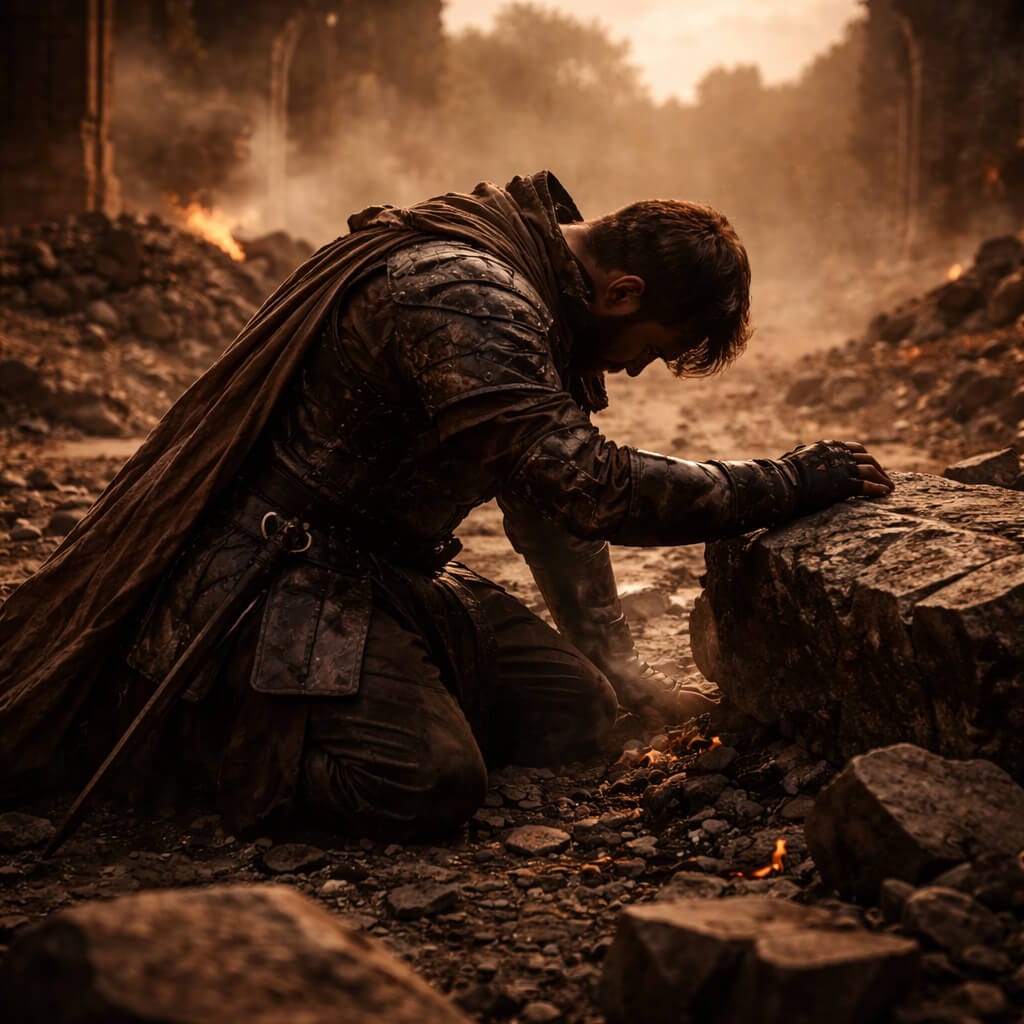
What It Means to Rise From the Ruins
To rise from the ruins means to continue after damage without becoming defined only by the damage.
It does not mean you erase memory. It does not mean you become untouched. It means you refuse to let pain become the final authority over who you are.
Ruins tell the truth. They show what has fallen. They expose what was weaker than it appeared. They strip away illusions. That is painful, but it can also be clarifying.
Many people fear the ruins because they reveal loss. But ruins also reveal what remains. Endurance. Breath. Will. Memory. Choice. Sometimes the strongest part of a person is not what never broke. It is what still chooses to stand after breaking.
Recovery is not only survival, it is also a return to direction, which is why the warrior path matters after collapse.
This is why rising matters. It is not an act of pretending. It is an act of rebuilding.
Pain, Loss and the Breaking Point
Pain changes perception. Loss changes structure. Hardship exposes what comfort hides.
There are seasons in life where strength feels distant. The mind grows tired. The heart closes. Trust becomes costly. Even simple movement can feel heavy. This is often the breaking point people speak of.
But the breaking point is not always where a person ends. Sometimes it is where false support ends.
Loss has a way of removing what cannot carry you. Titles. certainty. ego. dependence on approval. fragile expectations. What remains may feel bare, but it is more honest ground to rebuild on.
This does not make pain good. It makes pain real. And reality, however harsh, is a better foundation than illusion.
The work here is not to glorify suffering. It is to face it cleanly. To stop lying about its weight. To stop pretending recovery is automatic. To admit what was broken, so that what is rebuilt can be stronger.
Self Mastery Before Outer Victory
One of the deepest principles of the Warrior Path is this: rule yourself before trying to rule outcomes.
A person who cannot govern appetite, anger, fear, speech, or distraction remains vulnerable no matter how capable they appear. Outer success means little if inner disorder still controls the mind.
Self mastery does not mean suppression of humanity. It means command. It means your emotions are felt, but not obeyed blindly. It means desire is examined, not worshipped. It means reaction is measured before it is released.
This is one reason the path is demanding. It asks for honesty. It asks you to look at the places where weakness still runs your choices. It asks you to stop blaming circumstances for patterns that now belong to your own discipline.
Outer victory can impress others. Self mastery transforms the self.
Resilience After Collapse
Discipline is what makes the Warrior Code livable.
Resilience is often spoken of too casually. Real resilience is not aesthetic. It is not inspirational language detached from cost. It is the ability to continue, recover, adapt and rise after force has already hit.
Collapse changes people. Sometimes it leaves fear. Sometimes it leaves wisdom. Sometimes it leaves both. Resilience is what determines whether a person remains trapped in collapse or slowly builds beyond it.
This process is rarely dramatic. It may begin with small acts. Getting up. Returning to work. Speaking honestly. Eating again. Trusting carefully. Sleeping one full night. Refusing one destructive pattern. Holding one boundary. Surviving one more day without surrendering to despair.
These acts may look minor from the outside. They are not minor. They are the architecture of return.
Resilience after collapse does not ask a person to be unchanged. It asks them to remain alive to meaning, to effort and to the possibility of rebuilding.
Real resilience begins after impact, when a person must recover structure without pretending they were never shaken.
How Strength Is Rebuilt
Strength after hardship is rebuilt in layers.
First comes survival. Then stability. Then trust in movement. Then deeper formation.
A person emerging from hardship often wants immediate restoration. That is understandable, but rebuilding rarely works that way. Stability usually returns before confidence does. Function often returns before peace does. Movement begins before clarity is complete.
This is why patience matters. Rebuilding does not fail simply because it is slow.
Strength is rebuilt through consistency more than intensity. Through sleep restored. Through honest reflection. Through boundaries enforced. Through unhealthy attachments released. Through daily acts that re-establish order where chaos once spread.
Sometimes strength is rebuilt through solitude. Sometimes through support. Often through both.
The key is not speed. The key is true reconstruction.
As strength returns, the warrior code helps ensure that hardship does not turn a person bitter, careless or divided.
What is rebuilt carefully can hold more than what collapsed quickly.
Recovery Without Illusion
Real recovery is sober.
It does not promise that everything returns as it was. It does not say that scars disappear. It does not insist that loss was secretly easy or beneficial. It tells the truth and keeps moving.
This matters because false recovery is fragile. A person who tries to skip grief often collapses later. A person who performs healing without doing the work remains divided inside. A person who clings to illusion delays the rebuilding they actually need.
Recovery without illusion means accepting that some things changed permanently. It means accepting that healing may include limitation, caution and memory. It means understanding that wholeness after hardship is not the same as innocence before it.
There is no weakness in that. There is maturity in that.
The strongest recovery is not the loudest. It is the most honest.
Becoming Stronger Without Becoming Cold
One of the great dangers after hardship is hardening in the wrong way.
Pain can teach wisdom, but it can also teach bitterness. It can create sharper boundaries, but it can also create isolation. It can deepen discernment, but it can also make tenderness feel unsafe.
This is why the work is not only to become stronger. It is to become stronger without becoming cold.
That requires discipline. It requires self-awareness. It requires refusing to let pain write your character in its own image.
A person can become more careful without becoming closed. More discerning without becoming cynical. More resilient without becoming unreachable.
It takes courage to rebuild honestly after hardship without surrendering tenderness, truth or self-command.
This is one of the deepest forms of strength. Not merely surviving pain, but surviving it without surrendering your humanity.on the path.
Rising Again in Modern Life
Modern hardship is not always visible. Many people carry quiet ruins.
The end of trust.
The collapse of purpose.
The aftershock of betrayal.
The fatigue of long pressure.
The silent rebuilding after private grief.
These do not always leave visible marks, but they still demand recovery.
To rise again in modern life, a person must often do invisible work. Limit destructive input. Rebuild routine. Seek stable ground. Speak truth. Create space to recover. Stop feeding what keeps the wound open. Return to what restores order.
This may look unremarkable from the outside. From within, it can be monumental.
Rising again is not one act. It is a sequence of chosen returns.
Why Rise From the Ruins Still Matters
From the Ruins matters because hardship is not rare. It is universal.
What is rare is honest rebuilding.
Many are broken. Fewer rebuild well. Fewer still rebuild in a way that deepens wisdom without hardening the soul.
That is why this matters. Not because suffering should be romanticised, but because recovery should be understood. Pain changes people. The question is whether it leaves them smaller, colder and more fragmented, or clearer, stronger and more anchored.
From the Ruins exists for that second outcome.
It is for those who are not interested in shallow comfort. It is for those who want truth, endurance and the kind of strength that is built after impact.
Frequently Asked Questions
What does From the Ruins mean
From the Ruins means rising after hardship, loss, collapse or pain without denying what happened. It is about honest recovery and rebuilding.
How do you rebuild after hardship
You rebuild slowly and truthfully. Start with stability, routine, sleep, boundaries, honest reflection and the daily actions that restore order.
What is resilience after loss
Resilience after loss is the ability to endure, adapt and continue living meaningfully even after something important has broken or been taken away.
How do you become stronger without becoming cold
You become stronger without becoming cold by building discernment, boundaries and resilience while refusing bitterness, cynicism and emotional shutdown.
CONCLUSION
From the Ruins is not about avoiding pain. It is about what you do after pain has already entered.
It is the work of staying honest.
The work of rebuilding slowly.
The work of becoming strong again without becoming empty.
Ruins are not only evidence of what fell. They are also the place where truth becomes visible. And when truth is faced cleanly, rebuilding becomes possible.
That is why From the Ruins still matters. It speaks to the reality of hardship and the deeper reality that a person can rise again, carefully, honestly and with greater strength than before.
Continue with:
Resilience
Courage
Warrior Path
Warrior Code