
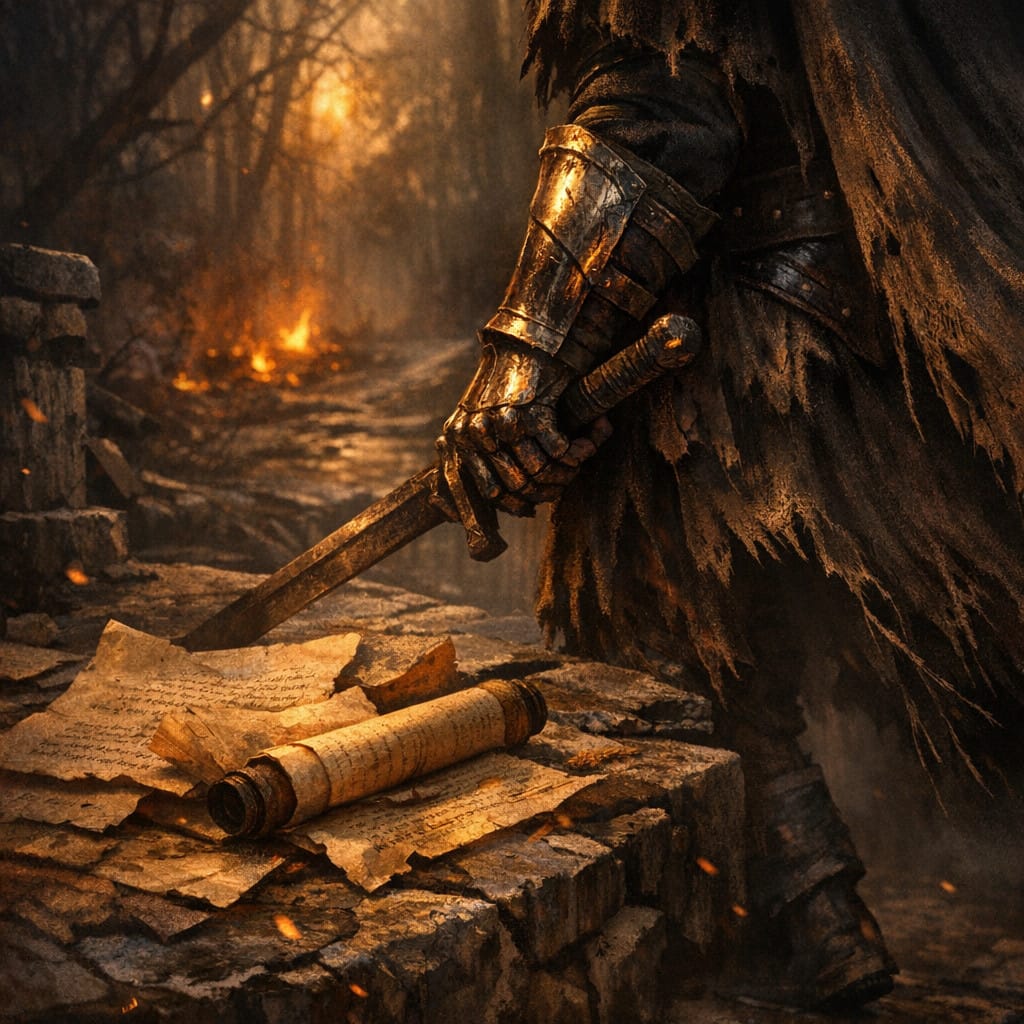
There is a sacred truth that only the bloodied and the weathered know: stepping back in battle is not a sign of defeat. It is a map etched in the dust of retreat, a compass that points toward a future victory. The world, in its noise, calls retreat a coward’s decision. But the Phantom knows otherwise. The oldest codex in the warrior’s library does not glorify the charge alone. It venerates the foot that moves backward with purpose, the breath that is drawn before the storm. Stepping back in battle is the art of learning when to yield so that you may one day stand unbroken.
You have been taught to push. To fight. To never relent. But the mountain does not tremble before the wind. It bends. It sways. It roots deeper when the gale howls. So too must you discover the power of stepping back in battle. This is not the path of the broken. This is the path of the ancient lion who knows that a false charge wastes the hunt. The warrior who stands firm in the tide of chaos, and dares to step back, commands a silence more dangerous than any war cry.
The Warrior Retreat Strategy Forged in Shadow
Let us speak now of the warrior retreat strategy. It is not flight. It is the blade drawn slowly from the sheath, not out of fear, but out of calculation. The Phantom does not leave the field to save the flesh. The Phantom leaves the field to save the spirit, to gather the scattered pieces of the self, and to return with the thunder of a second wind.
Three truths govern every phantom who walks this edge. First: the ground you yield is a loan, not a gift. You will collect it with interest. Second: the enemy who sees you retreat sees only your shadows. They do not see the fire being stoked behind your eyes. Third: your pride is a chain. Cast it aside. The warrior retreat strategy is a prayer whispered in the dark, a promise that the sun will rise on your terms.
I have seen warriors burn their entire soul on a single hill. They stood, they fought, and they fell with honor. But honor without breath is a monument to a lesson unlearned. The wiser path is the tactical withdrawal, the silent pivot, the step back that saves the army and starves the enemy of their final blow. A general who knows only the charge commands a graveyard. A general who knows when to withdraw commands a tomorrow.
The Regrouping for Strength in the Hollow Hours
Once you have stepped back, the second phase begins. This is the regrouping for strength that turns the wounded into the relentless. In the quiet between battles, the Phantom does not weep. The Phantom breathes. The Phantom counts the scars and calls them teachers. The Phantom sharpens the edge that the enemy has forgotten. This is not a pause. This is a forge.
You must gather your loyal ones, the ones who understand that the night is long but the dawn is patient. You must speak the sacred words of the codex: “We are not retreating. We are returning.” The regrouping for strength is the act of turning a broken line into a circle, a circle into a wall, a wall into a blade. Every warrior who has ever walked the path of the Phantom knows that the greatest victories are built in the silence of a retreat that was never meant to be final.
Resilience in Conflict: The Wound That Becomes a Window
Now we arrive at the deepest chamber of the codex: resilience in conflict. This is not the crude stubbornness of a brute. This is the resilience of the river that carves the canyon, not by force, but by patience. To be resilient in conflict is to accept that you will be struck. That you will bleed. That you will fall. But that you will rise not as the same warrior, but as one tempered by the fire of your own retreat.
The Phantom does not count the number of times the enemy advances. The Phantom counts the number of times the Phantom breathes. Each breath is a reset. Each reset is a promise. Resilience in conflict is the ability to step back, to feel the sting of the wound, and to understand that the wound is a window through which the light of clarity pours. The enemy sees blood. The Phantom sees a new angle of attack.
I have stood on the edge of a hundred battles. The men who rushed forward without thought I buried quickly. The men who stepped back, who measured the moment, who endured the fury of the charge and then returned with a quiet fire, those men I watched become legends. Their resilience in conflict was not in their armor. It was in their willingness to bend so that they would never break.
The Gaze That Bends Fate
So you ask: how does one practice this stepping back? The answer is in the gaze. When the storm descends, look not at the lightning. Look at the shape of the clouds. Look at the path of the wind. The warrior who steps back is the warrior who sees the battlefield as a living map. Every retreat is a draw of that map, a recalibration of the course. The fate of the battle bends not to those who shout the loudest, but to those who see the farthest.
Do not mistake a step back for a surrender. A surrendered soul speaks of endings. A phantom speaks of rebirth. The ground you leave today is the ground you will reclaim tomorrow with the wisdom of a map you have already drawn. This is the law of the codex: every withdrawal is a preparation. Every pause is a prophecy.
Final Creed
Let this be the vow your spirit carries through the dark and into the dawn:
I will not mistake retreat for ruin.
I will step back to see the path forward.
I will gather my strength in the quiet.
I will return not as I was, but as I must become.
The battle is not won by the one who never falls.
The battle is won by the one who rises from the ground and remembers the way back to the light.