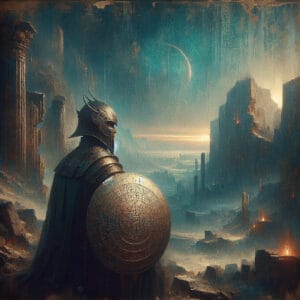
Honor is one of the oldest words in the language of the warrior, and one of the most misunderstood.
Many people treat honor as image, reputation, or outward nobility. That is too shallow. Real honor begins deeper. It begins in truth, conduct, restraint, and the standard a person holds when there is no reward for holding it.
Honor is not performance. It is not public theater. It is not the need to look righteous in front of others. It is the refusal to betray what you know is right, even when no one would notice.
That is why honor remains one of the defining principles of the warrior. It gives shape to strength. It keeps power from becoming corruption. It forces character to answer to something higher than convenience.
If you are looking for the meaning of honor, or what it means to live with honor in the modern world, this is where to begin.
What Honor Really Means
Honor is the alignment between what a person claims to value and how they actually live.
It is not enough to speak about values. Honor begins when conduct reflects them. That is why honor always involves consistency. A person of honor is not one thing in private and another in public. They do not trade principle for convenience depending on who is watching.
Honor also requires truth. You cannot live honorably while lying to yourself about your motives, your actions, or your compromises. Honest self-examination is part of honor because self-deception is one of the first ways integrity breaks.
This is why honor feels demanding. It removes the shelter of excuses. It asks whether your standards are real when there is pressure, temptation, fatigue, or fear.
Honor remains one of the defining principles of the warrior code because it binds strength to truth and conduct.
Honor is not softness. It is not image. It is inner alignment lived outwardly.
Honor Versus Pride
Honor and pride are often confused, but they are not the same.
Pride is concerned with how the self appears. Honor is concerned with whether the self remains true.
Pride is fragile because it depends on recognition, status, or ego. Honor is steadier because it depends on conduct. Pride reacts quickly to insult. Honor does not need to answer every insult. Pride wants to win appearances. Honor wants to remain clean in action.
This distinction matters because many destructive choices are defended in the name of honor when they are really acts of wounded pride. Revenge, vanity, stubbornness, and needless escalation often belong more to pride than honor.
A mature warrior learns the difference. Honor may require firmness, but it does not require vanity. Honor may require standing your ground, but it does not require feeding ego.
When pride rules, clarity collapses. When honor rules, action becomes cleaner.
Honor in Action
Honor only becomes real when it enters action.
It appears in keeping your word.
In speaking truth carefully.
In refusing shortcuts that poison the result.
In staying accountable when it would be easier to deflect blame.
In showing respect without surrendering standards.
In doing what is right even when it is inconvenient.
This is why honor is practical, not decorative. It shapes speech, decisions, boundaries, work, and loyalty. It is visible in the small moments long before it is tested in large ones.
A person of honor does not need to announce it constantly. Their choices begin to reveal it.
Honor in action also means restraint. Not every victory is worth taking. Not every opportunity should be seized. Not every response should be spoken. Sometimes honor is shown by what you refuse to do.
Once honor moves from principle into repetition, it begins to shape the warrior path through daily conduct.
Honor in Silence and Restraint
Some of the deepest forms of honor are quiet.
Honor is often imagined as something dramatic, but much of it is built in silence, restraint, and the refusal to become lesser in response to pressure.
This may mean refusing to lie for advantage.
Refusing to betray trust for convenience.
Refusing to humiliate someone when you have the power to do so.
Refusing to answer noise with more noise.
These acts rarely attract attention. Yet they are often where honor is most visible.
Restraint matters because strength without restraint becomes dangerous. A warrior who cannot govern speech, anger, appetite, or ego cannot carry honor for long. Eventually force outruns principle.
Honor in silence does not mean passivity. It means measured action. It means you do not need spectacle to confirm your standards.
Honor, Integrity and Responsibility
Honor cannot stand alone for long without integrity and responsibility.
Integrity keeps the inner structure intact. It prevents self-division. It keeps a person from saying one thing while doing another. Responsibility makes honor visible in the real world. It forces values to carry weight.
This is important because honor without responsibility becomes self-image. Responsibility without honor becomes mechanical duty. Together, they create a stronger foundation.
A person of honor owns their actions.
Owns their word.
Owns their failures.
Owns the line they claim to stand on.
That ownership is part of what gives honor its gravity. It is not ornamental. It is binding.
Without discipline, honor becomes unstable, because standards must be held repeatedly before they become real.
Why Honor Still Matters Today
Honor still matters because modern life does not remove the need for principle. It exposes it.
In a world shaped by speed, noise, image, and reaction, honor remains one of the clearest tests of inner structure. It asks whether a person can stay aligned when approval shifts, when shortcuts are rewarded, and when appearances matter more than truth.
That makes honor more relevant, not less.
Without honor, strength becomes opportunistic.
Without honor, speech becomes cheap.
Without honor, loyalty becomes dangerous.
Without honor, discipline loses moral direction.
Honor reminds a person that not everything permitted is worthy. Not everything profitable is clean. Not everything easy is right.
That is why honor endures. It is one of the few principles that protects a person from becoming divided within themselves.
Living With Honor in the Modern World
Living with honor now requires clarity and repetition.
You decide what your word means.
You decide what you will not betray.
You decide how you will act when it costs something.
Then you repeat those choices until they become part of your structure.
Living with honor may include:
keeping commitments
telling the truth cleanly
acting without deception
respecting others without becoming weak
holding boundaries without cruelty
correcting yourself honestly
remaining accountable under pressure
Honor is not perfection. It is correction. The honorable person does not never fail. They refuse to hide from failure. They return to the standard and make themselves answer to it again.
This is one reason honor remains difficult. It cannot be faked for long.
Even after hardship, a person can rebuild with honor, which is why the themes of from the ruins often meet this virtue.
Related Readings on Honor
You can explore more through these related readings:
Also explore:
Warrior Path
From the Ruins
Discipline
Courage
Loyalty
Frequently Asked Questions
What is honor
Honor is the alignment between what a person values and how they actually conduct themselves. It involves truth, integrity, restraint and accountability.
What is the difference between honor and pride
Pride is concerned with image and ego. Honor is concerned with truth, conduct and remaining true to principle.
Why does honor matter
Honor matters because it gives moral direction to strength, loyalty and discipline. It keeps power from becoming corruption and conduct from becoming convenience.
How do you live with honor today
You live with honor by keeping your word, telling the truth, acting cleanly, taking responsibility, and correcting yourself when you drift from your standards.
CONCLUSION
Honor is not decoration. It is alignment.
It asks whether strength is governed.
Whether speech is clean.
Whether conduct reflects principle.
Whether the self remains true when pressure rises.
That is why honor remains one of the defining principles of the warrior. It keeps character from fracturing. It keeps strength from becoming empty. It keeps a person answerable to more than mood, advantage, or appearance.
Honor still matters because truth still matters. Conduct still matters. And the standard a person chooses still shapes the kind of life they build.
Continue with:
Warrior Code
Warrior Path
From the Ruins
Discipline
Courage
Loyalty