The Fallen Warrior’s Redemption: A Sword Turned Flat
The Echo in the Shattered Steel
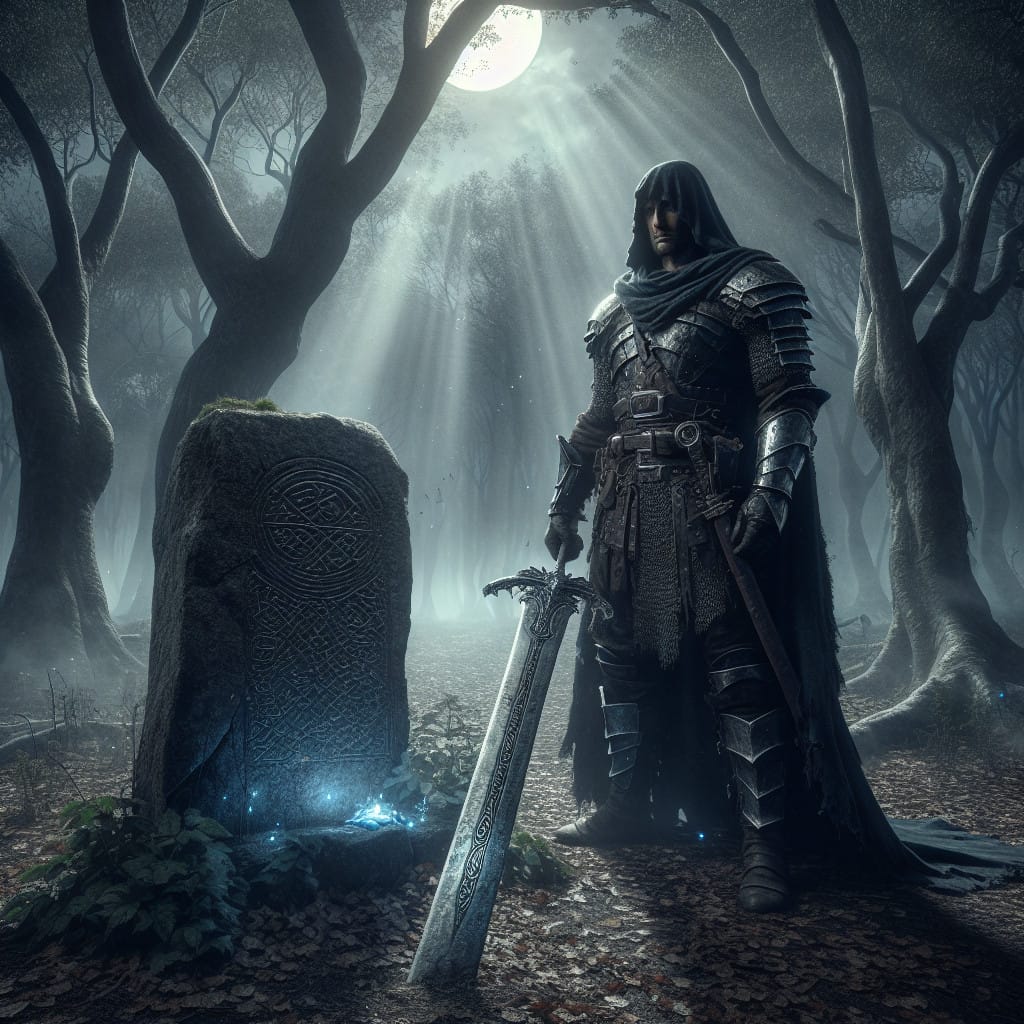
Imagine the scene. The battlefield is quiet, a tomb of spent ambitions. There, a warrior kneels. Not in prayer, but in collapse. His mythic weapon, the symbol of his name, his oath, his very identity, lies broken. The gleaming edge is gone. All that remains is a flat, useless length of metal.
This is the crucible. In that flat of the blade, he does not see ruin. He sees a mirror.
It reflects a face stripped of titles. It shows the pride that led to the overreach, the fear disguised as fury, the weakness in the foundation. The warrior resilience story is born in this moment of absolute, unflinching honesty. The weapon’s purpose has transformed. It is no longer a tool for striking outward, but a plate for seeing inward. This is where the true forging begins.
The Forge of Humble Earth
The fallen one rises. He does not seek a new sword. He carries the flat. He uses it to dig.
- He digs trenches for the village that fears him.
- He uses it as a shovel to plant seeds in scorched earth.
- He employs it as a lever to raise fallen stones for those whose homes were broken in wars he once fueled.
With every blameless act, the metal loses its cold sheen. It gains the warmth of earth, the patina of service. The flat blade becomes a plowshare, a tool of creation. This is the unseen battle, the relentless campaign against one’s own past. Each day of quiet rebuilding is a victory more potent than any remembered slaughter. The fallen warrior redemption is etched not in monuments, but in restored fields and sheltered heads.
The Unseen Edge of the Spirit
Seasons turn. The warrior’s hands, once calloused from the grip of a hilt, are now calloused from different labors. His strength remains, but its direction has shifted. The flat blade is now polished by use, by wind, by rain, by purpose.
Then, a shadow falls again. A new threat, crude and violent, descends upon the peaceful land. The villagers look to him, not with the old fear, but with a silent question. The warrior looks at the flat metal in his hands. It has no point. It has no edge.
But he has been reforged.
He steps forward. When the brutish foe swings a crude axe, the warrior does not parry with a sharpness he no longer possesses. He meets force with foundation. He uses the flat to deflect, to redirect, to absorb. The mythic weapon symbolism is complete. It is no longer a sword. It is a shield. Its strength is not in cutting, but in covering. Its power is not in taking life, but in preserving it. He fights not to conquer, but to protect the peace he helped build. This is the final, luminous stage of his fallen warrior redemption.
The Chronicle of the Carried Weight
This is the truth omitted from most legendary warrior tales. The greatest weapon is not the one that never fails. It is the one that teaches you how to be whole after you have been broken. A sword can be shattered. A spirit, once tempered in the fires of humility and purpose, cannot.
Your breaking is not your end. It is your beginning. Your flaw is not your failure. It is your fingerprint. Carry your flat blade. Dig with it. Build with it. Let it shield others. In that service, you will find an edge that never dulls, a point that never breaks, forged in the spirit’s invincible core.
The Creed of the Flat Blade
I will not fear the break, for it reveals my true shape.
I will use the flat to see, to dig, to raise.
My strength is now a shelter, my resilience a silent wall.
I am the fallen, redeemed.
My weapon is my will, and it is unbreakable.
Explore the full Warrior Code: Principles of Honor, Discipline, Courage and Loyalty for deeper insight into honor, discipline, courage and loyalty.