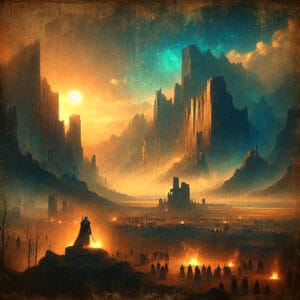

Every soul knows the ashes. The cold aftermath of a dream consumed. The grey silence where a fire once roared. This is the terrain we are born into, or fallen into. But the ancient texts, the ones written not in ink but in the scars of those who have endured, speak of a different truth. They speak of The Fire Beneath Ashes.
This is not merely a story. It is a map of the underworld within. A chronicle of the ember that refuses to die.
The Lay of the Land: A Summary Forged in Shadow
Our protagonist walks a world turned to dust. A life built on promises now lies in ruins, a kingdom of the heart surrendered to a long winter. The ashes are not a metaphor; they are the air he breathes, the taste on his tongue. He believes the fire is lost.
But a whisper begins. A memory of heat. The journey is not one of seeking a new flame, but of kneeling in the ruins and listening. It is the arduous task of sifting through the cold debris of failure, grief, and betrayal to find what was never extinguished, only buried.
The path is marked by three trials:
- The Acceptance of Embers: To cease fighting the ashes and instead learn their texture. To understand that the fall is part of the rise.
- The Breath of Memory: To recall the original fire, the purpose, the love, the passion that once burned so bright it cast long shadows.
- The Gathering of Kindling: The small, deliberate acts of courage. The choice to stand once more, to shield a single spark from the wind of despair.
The Unseen Inferno: Decoding the Meaning
The true power of this tale is not in the final conflagration, but in the discovery of the hidden forge. The meaning of The Fire Beneath Ashes is an ancient warrior’s truth: strength is not born in victory, but forged in the crucible of loss.
The ashes are not the enemy. They are the insulation. They are the proof of a fire that was. They protect the vital core from the elements until the warrior is ready to return, wiser and more potent than before.
This novel teaches that our lowest moments are not our end, but our deepest initiation. The self that emerges from the ashes is not the same as the one that entered the flames. It is tempered. It holds a quiet, unshakeable heat that no storm can quell.
The Warrior’s Verdict: A Review of Spirit
To review this chronicle is to review one’s own scars. It is not a gentle fable but a stark and beautiful mirror. The prose does not coddle; it challenges. It speaks in the language of smiths and soldiers—of pressure, heat, and the reshaping of raw material into a lethal and beautiful truth.
Its power lies not in a complex plot, but in the profound simplicity of its central image: the ember beneath the grey. It is a myth for those who have known darkness and suspect, against all evidence, that a dawn resides within them.
The Final Creed: The Vow of the Phoenix
Let these words be your oath, spoken not to the sky, but to the smoldering ground of your own spirit.
I will not curse the ashes, for they are the proof of my fire.
I will tend the hidden ember with the breath of my will.
I will rise, not as I was, but as I am—
Forged in the fall,
Unbroken by the night.
Explore the full Warrior Path: The Discipline of Self Mastery and Endurance for deeper guidance on self mastery, discipline and endurance.